British Glass demands urgent Government action after MPs warn pEPR threatens UK glass manufacturing

Sheffield 02 July 2026
British Glass is calling for urgent Cabinet-level intervention on packaging Extended Producer Responsibility (pEPR) after yesterday’s Parliamentary debate exposed growing political concern over the policy’s impact on UK manufacturing, jobs and investment.
MPs from across Parliament warned that the current weight-based charging model is driving businesses away from infinitely recyclable glass and towards imported packaging and less circular materials such as plastic.
The debate, secured by Sarah Champion MP following sustained engagement with British Glass, manufacturers, trade unions and supply chain organisations, saw repeated warnings that the policy is undermining both circular economy objectives and the Government’s wider industrial growth ambitions.
A poorly designed policy, poorly implemented
Opening the debate, Sarah Champion MP said:
“It cannot be right that a plastic bottle should be a more cost-effective packaging choice than an infinitely recyclable glass bottle as a direct result of a government policy designed to encourage sustainable and environmentally friendly packaging choices.”
Champion described the current scheme as:
“A poorly designed policy, poorly implemented, and it will cost the economy dearly.”
She added:
“The aims of EPR may be laudable, but its design and implementation has been a catalogue of errors. It is wholly unworkable and ultimately counter-productive in its current form.”
Champion also warned:
“As it stands, EPR will be bad for business, bad for growth and bad for the environment. Worst of all, it could place jobs in Rotherham at risk.”
Growing risk of UK manufacturing being displaced by imports
MPs raised concerns around delayed investment decisions, pressure on energy-intensive industries, the impact on pubs and hospitality businesses already paying for commercial waste collection, and the growing risk of UK manufacturing being displaced by imports.
Sarah Pochin MP described Encirc as a “phenomenal” employer and warned the current system unfairly penalises glass while benefiting competing materials.
Despite widespread concern raised during the debate, British Glass said the Government response failed to provide the urgent action industry now requires.
Responding for the Government, Nature Minister Mary Creagh pointed to future consultations, reviews and potential future fee adjustments, but did not commit to immediate intervention or support for the sector’s request for a targeted and time-limited 75% reduction in glass fees.
The current system risks creating a death spiral for UK glass
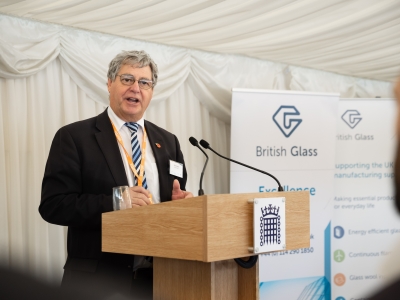
Dr Nick Kirk, Federation Director at British Glass, said:
“Yesterday’s debate showed there is now clear and growing recognition across Parliament that the current pEPR system is damaging UK manufacturing and actively driving businesses away from glass.
“MPs from multiple parties raised concerns about job losses, delayed investment, imports increasing and businesses switching away from infinitely recyclable glass because of the costs being imposed by this policy.
“This is not an environmental policy if it makes infinitely recyclable glass more expensive than less circular alternatives.
“The current system risks creating a death spiral for UK glass. Higher fees drive switching away from glass, switching reduces UK demand, and falling demand then threatens jobs, investment and the long-term viability of domestic manufacturing.
“Industry does not need more promises of future reviews while businesses face serious costs today. We need urgent action now.
“The Government cannot claim to support industrial growth, clean growth and advanced manufacturing while simultaneously implementing a policy that is pricing UK-made glass out of the market.
“The implications of pEPR extend far beyond environmental policy. DEFRA has not adequately recognised the potential consequences for jobs, investment and UK economic growth. Urgent Cabinet-level engagement is now required to address this industrial competitiveness.”
Immediate intervention is critical
British Glass is calling on Government to delay the announcement of Year 2 pEPR fees and introduce an immediate 75% reduction in glass fees while a wider review of the scheme is undertaken.
This will help create a more level playing field between packaging materials, prevent further switching away from glass, protect skilled manufacturing jobs and maintain investment in UK industry while longer-term reforms are considered.
British Glass also welcomed confirmation during the debate that Trade Remedies Authority investigations into Turkish and Chinese glass imports remain ongoing. However, this must now be matched by clearer timelines on trade protection measures, including the UK Global Tariff review and options to prevent further displacement of UK-made glass.
British Glass will continue working closely with MPs across Parliament, manufacturers, trade unions and supply chain partners to press for urgent changes before further damage is done to the UK glass sector.